



Museo de la Batalla de Bailén
Total: 27 results found.
Page 1 of 2
Revista LOCVBER - Vol. 8/2024

- Índice (.pdf)
- La portada renacentista de la Encarnación de Bailén: allá maniera di … ¿Diego de Pesquera? Juan José Villar Lijarcio (.pdf)
- Bailén en los caminos de Andalucía (1749-1967). Rafael Domínguez Rodríguez (.pdf)
- Análisis del "desaparecido" castillo de Bailén a través de la acuarela del Museo de la Batalla de Bailén: aportaciones desde la interdisciplinariedad. Ana María Carmona Casado (.pdf)
- La vida de Bailén en 1874 al final de la I República. Miguel Ángel Alonso Roa (.pdf)
- Un órgano del antiguo convento de Dominicos de Almagro para la iglesia de la Encarnación (1889). Juan Pedro Lendínez Padilla (.pdf)
Varia
- La Dama de Baza, un hallazgo pionero que cambió las investigaciones y a los investigadores. Eva María López Martín (.pdf)
- El turismo arqueológico en la provincia de Jáen. Diagnóstico y propuesta de mejora. Magdalena Lucena González (.pdf)
Created on 2025-04-02 06:49:52
Revista LOCVBER - Vol. 7/2023
- Índice (.pdf)
- La antigüedad tardía en Bailén: La materialidad como testigo de la historia. José Carlos Ortega Díez, Juan José López Martínez, Juan Jesús Padilla Fernández, Luis Arboledas Martínez (.pdf)
- Un tabernáculo-sagrario para la iglesia de Bailén de los artistas Luis Fernández y Antonio de Medina (1764). Juan Pedro Lendínez Padilla (.pdf)
- Bailén (1868-1874): Sexenio democrático y el movimiento republicano. Miguel Ángel Alonso Roa (.pdf)
- La iglesia de Consolación durante los siglos XIX y XX: la escuela de la ermita de Jesús (1839-1928). Juan Pedro Lendínez Padilla, Juan José Villar Lijarcio (.pdf)
- Conservación y restauración de las pinturas murales de la Capilla de la Virgen del Rosario en la Iglesia Parroquial de la Encarnación de Bailén (Jaén). María Elena Mora Ruedas (.pdf)
Varia
- La Zona III de la Necrópolis íbera de Tútugi. Un estado de la cuestión y nuevas aportaciones. Eva María López Martín, Blas Moreno Rusillo (.pdf)
- Documentación de las letras barrocas de la Catedral de Granada a través del análisis de imagen y la fotogrametría (SfM). Lorena Stancescu, Alexis Maldonado Ruiz, Alberto Dorado Alejos (.pdf)
Created on 2023-03-16 12:02:42
Revista LOCVBER - Vol. 6/2022
- Índice (.pdf)
- Problemática sobre una lápida de fines del s.II d.C. en La Toscana (Bailen, Jaén) : Juan José López Martínez, Alejandro Beltrán Ortega, Luis Arboledas Martínez y Juan Jesús Padilla Fernández (.pdf) (.pdf)
- Toponomia e historia urbana: formación, evolución y manipulación política del callejero antiguo de Bailén : Juan José Villar Lijarcio (.pdf)
- La desaparecida ermita de Nuestra Señora de Consolacion (s. XVI) y la capilla de Jesús Nazareno (s. XVIII) : Juan Pedro Lendínez Padilla (.pdf)
- Aproximación a la (des)aparición de Bailén en el sistema educativo español: Antonio Jesús Maldonado Galindo (.pdf)
- Un bailenense en la Guerra del Rif. El soldado del Regimiento de Infantería Mecanizada Castilla Nº 16 Manuel Hidalgo Sicilia: Miguel Ángel Alonso Roa (.pdf)
- El yacimiento de Úbeda la Vieja. Un estado de la cuestión sobre su situación e historia: Samuel Fernández García (.pdf)
Created on 2023-03-16 12:02:42
Revista LOCVBER - Vol. 5/2021
- Índice (.pdf)
- Las pinturas murales de la capilla de la Virgen del Rosario en la iglesia de la Encarnación de Bailén (Jaén) : Juan José Villar Lijarcio (.pdf)
- La ermita de Santo Tomás de Aquino del cortijo de la Toscana (Bailén, Jaén) : Juan Pedro Lendínez Padilla (.pdf)
- 19 de julio de 1808. Población: Bailén. Provincia: Sevilla : Antonio Jesús Maldonado Galindo (.pdf)
- Apuntes biográficos de D. Hermenegildo González Martínez. Médico militar afincado en Bailén que combatió en la Guerra de Cuba : Miguel Ángel Alonso Roa (.pdf)
- El escudo de Bailén: Breve recorrido por su historia : Francisco Luis Sola-Isidro Olmo (.pdf)
- De la saeta primitiva a la saeta flamenca. Los Cantes de Pasión bailenenses : Francisco Antonio Linares Lucena (.pdf)
- Los platos, piezas significativas de la alfarería bailenense tradicional : José Luis Villarejo Aguilar (.pdf)
Created on 2022-01-25 11:16:04
Revista LOCVBER - Vol. 4/2020
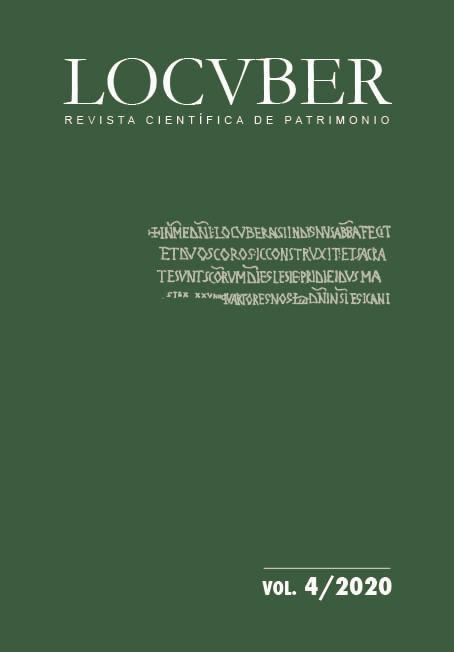
- Índice (.pdf)
Local
- La ocupación prehistórica de El Chorrillo (Bailén, Jaén). Nuevas aportaciones al complejo cultural de la Depresión Linares-Bailén y su área meridional : Paula Pinillos de la Granja, Juan José López Martínez, Luis Arboledas Martínez, Juan Jesús Padilla Fernández. (.pdf)
- Puesta en valor del patrimonio histórico y natural del Monte Público de Burguillos (Bailén, Jaén) : Juan José López Martínez, Auxilio Moreno Onorato, Luis Arboledas Martínez, Juan Jesús Padilla Fernández. (.pdf)
- El corregidor Felipe de la Neve, la rehabilitación de la iglesia de San Andrés y el patronazgo de Santa Gertrudis : Juan Pedro Lendínez Padilla, Juan José Villar Lijarcio.(.pdf)
- Castaños: el odiado. Propaganda y opinión pública tras la batalla de Tudela : Daniel Aquillué Domínguez.(.pdf)
- Un bailenense en la Guerra de Cuba: El soldado del batallón de Cazadores de Tarifa nº5. D. José Chico Barragán : Miguel Ángel Alonso Roa.(.pdf)
- Las grandes orzas aceiteras bailenenses del siglo XIX: José Luis Villarejo Aguilar. (.pdf)
- Arqueología Pública en Bailén: el ejemplo de la prospección arqueológica en su término municipal: José Carlos Ortega Díez, Juan José López Martínez, Luis Arboledas Martínez, Juan Jesús Padilla Fernández, Álvaro Rossi Cabrera, Antonia García Lara.(.pdf)
Varia
- El Argar en Jódar, Jaén: Caracterización arqueológica y breves apuntes alrededor de una decisión política: Miguel Yanes Puga, Alberto Dorado Alejos, Francisco Contreras Cortés.(.pdf)
Created on 2021-02-01 08:11:41
Revista LOCVBER - Vol. 3/2019
- Índice (.pdf)
- Mineria antigua en el Alto Guadalquivir: El caso del Cerro de Los Atalayones o mina de Buenaplata en Bailén : Luis Arboledas Martínez, Juan Jesús Padilla Fernández, Juan José López Martínez. (.pdf)
- Nuevas consideraciones sobre los modelos de ocupación territorial en el Alto Guadalquivir: el yacimiento ibero-romano de La Toscana (Bailén, Jaén). Juan José López Martínez, Juan Jesús Padilla Fernández, Luis Arboledas Martínez, José Carlos Ortega Díez, Antonia García Lara (.pdf)
- La ermita de La Soledad: historia del monumento más antiguo de Bailén. Juan Pedro Lendínez Padilla, Juan José Villar Lijarcio(.pdf)
- La devoción al Santo Rostro durante el trienio constitucional. La Santa Faz procesiona en Bailén en 1823. Miguel Ángel Alonso Roa.(.pdf)
- Entre el mito y la realidad: Bailén en la España del siglo XIX. Daniel Aquillué Domínguez.(.pdf)
- El mito de Bailén durante la Guerra de Cuba (1895-1898). Antonio Jesús Maldonado Galindo(.pdf)
- Orígenes, continuidad e influencias de familias alfareras bailenenses. José Luis Villarejo Aguilar.(.pdf)
- El Flamenco en Bailén. Recorrido histórico. Francisco Antonio Linares Lucena.(.pdf)
- Nuevos datos para el conocimiento y conservación-restauración del conjunto textil rojo de la Virgen de Zocueca, Patrona de Bailén. Gabriel Ferreras Romero, Lourdes Fernández González.(.pdf)
- Conservación y restauración de la fachada del Palacio Ducal de Bailén. Elena Mora Ruedas, Miriam Tomás Pellicer.(.pdf)
Created on 2020-01-27 10:48:03
Revista LOCVBER - VOL. 2/2017
- Índice (.pdf)
- Redefiniendo asentamientos: El yacimiento arqueológico de Las Piedras del Cardado (Bailén, Jaén) Juan Jesús Padilla Fernández, Luis Arboledas Martínez, Juan José López Martínez, Álvaro Rossi Cabrera, José Carlos Ortega Díez. (.pdf)
- El Remolinillo (Bailén,Jaén). El descubrimiento de una nueva villa romana en el Alto Guadalquivir Juan José López Martínez, Juan Jesús Padilla Fernández, Luis Arboledas Martínez, Álvaro Rossi Cabrera, José Carlos Ortega Díez. (.pdf)
- El bailenense Coronel Costilla, precursor español de la informática Miguel Ángel Alonso Roa(.pdf)
- Los monumentos a la Batalla de Bailén en la prensa española en el siglo XX. Entre lo local y lo nacional. Rafael Domínguez Rodríguez.(.pdf)
- Iconoclastia religiosa en Bailén: la destrucción del patrimonio artístico durante la Guerra Civil. Juan Pedro Lendínez Padilla, Juan José Villar Lijarcio.(.pdf)
- Seis ilustres poetas bailenenses. Francisco Antonio Linares Lucena(.pdf)
- Por el reconocimiento y puesta en valor de la alfarería tradicional bailenense. José Luis Villarejo Aguilar.(.pdf)
- La villa de los héroes de 1808. Proyecto de elaboración de la maqueta de Baylén en 1808. Francisco Antonio Linares Lucena, Ángel Francisco Ruiz Garzón, Miguel Ángel Alonso Roa, Bartolomé Serrano Cárdenas.(.pdf)
- Murales Conciencia. Diego Ortega-Alonso.(.pdf)
Created on 2019-05-06 11:48:47
Legal Warning
Legal Warning
The Museum, through this web page, shows information of general interest of the Museum of the Battle of Bailén. The information provided is the one in force at the time of publication.
The City of Bailén ensures that this information is accurate, and proceeds to update it as quickly as possible, trying to avoid errors and correcting them as soon as it detects them. However, Bailén City Council can not guarantee the absence of errors or that the content of the information is permanently updated.
The Bailén City Council may, at any time and without prior notice, modify, delete or update the published information or change its configuration or presentation.
The access to the Web portal, as well as the use of the information that contained, is the unique responsibility of the user. Bailén City Council is not responsible for any damages that may arise from these facts, and it can not guarantee that the access is not interrupted or that the content or software is free of any error.
Published content may include links to pages in external websites that are considered to be of interest to the users. The Bailén City Council does not assume any responsibility derived from the connections or contents of those links.
This Web page may use "cookies" to save configuration information of the Web page. In no case personal data will be stored in "cookies" nor they will be used to obtain user information. "Cookies" are fragments of information that are stored in the user's site that uses the browser at the request of the server of the Web page. Users who do not want to receive "cookies" or wish to be informed of when a "cookie" is going to be installed on their system, should configure their browser to work in this way. It is also reported that users can delete all generated cookies at any time.
Created on 2017-10-11 09:38:46

Magazines
Magazines
Soon, and under the protection of the Department of the Historic Heritage, Crafts and Ceramics in Bailén, a new scientific magazine dedicated exclusively to the heritage of Bailén, as well as the province of Jaén, will be published. It will be called "LOCVBER" in memory of the abbot that appeared in the inscription of the ancient headstone of the visigoth monastery of Bailén.
Created on 2017-08-17 07:28:23
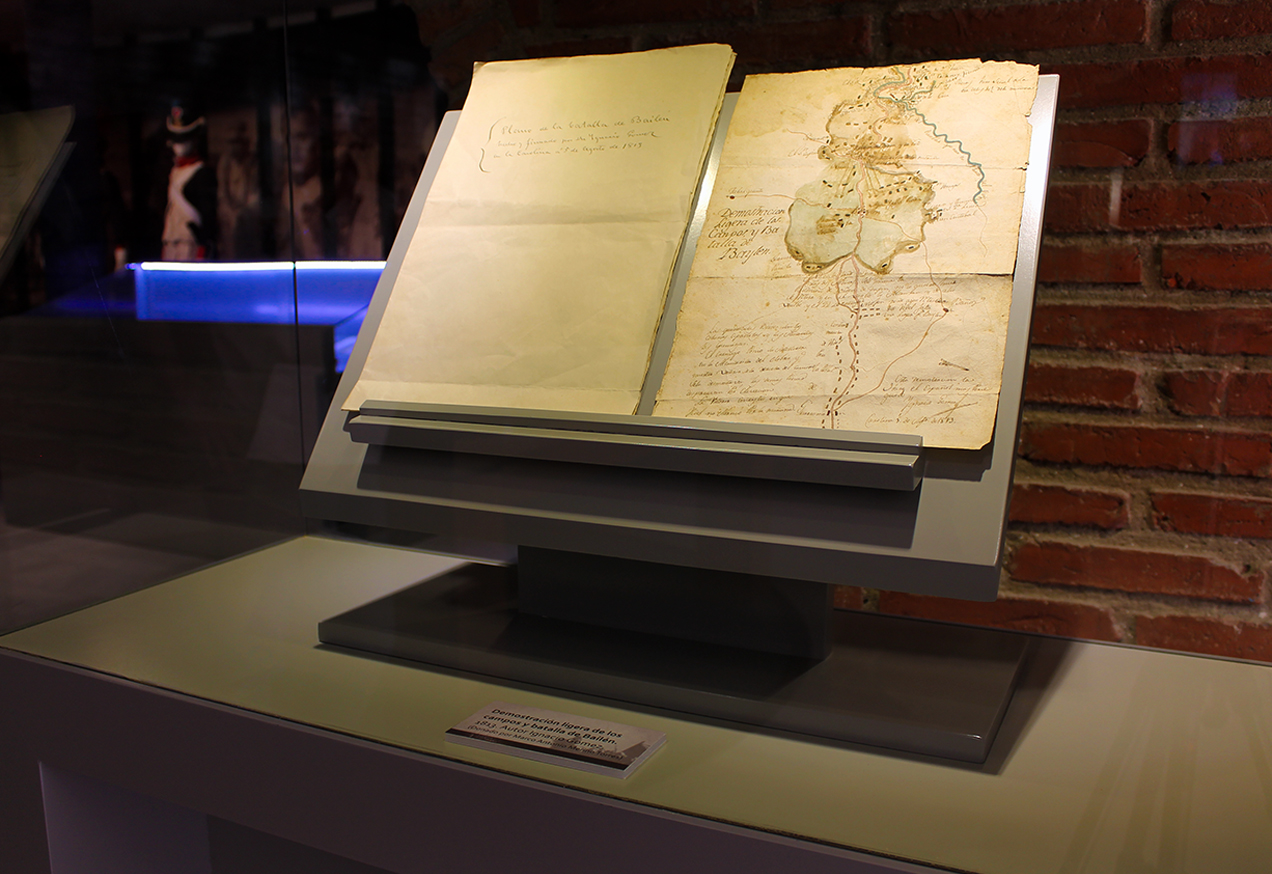
Practice program
Practice program
The Museum of the Battle of Bailén through the town hall is open to agreements with any educational institution of national scale, offering the possibility of developping a program of practices in the Museum (taking into account the conditions previously agreed upon among the institutions involved).
Created on 2017-08-14 11:47:27
Publications.
Publications
The Museum's library offers a large and varied catalog of books focused on local history, with special emphasis on those related to the Battle of Bailén. These include (titles in spanish):
- Actas de las jornadas sobre la Batalla de Bailén y la España Contemporánea (from 2001 to 2008).
- Libro de Actas capitulares de 1808 del Ayuntamiento de Bailén (2008).
- Soldados de 1808. Miguel Alonso Roa (2008).
- Bailén 1808. Diarios y memorias. Guerra de la Independencia. Jesús de Haro Malpesa (2004).
- Los pontones de Cádiz y la odisea de los soldados derrotados en la Batalla de Bailén. Vicente Ruiz García (2012).
- Baylén 1808-2008. Acta del Congreso Internacional “Baylen 1808-2008”.
- Baylén: Su impacto en la Nueva Europa del siglo XIX y su proyección futura (2009).
- El capitán General Castaños. Pasíón por España. Miguel Marchamalo Maín (2016).
- Descripción de la Batalla de Baylén y auxilios que en ella dieron los vecinos. (Facsímil). Antonio José Carrero (1815).
- Bailén, 19 de julio de 1808. La firmeza de un pueblo. José Mollá Ayuso (2017).
- Baécula, la enigmática ciudad iberorromana. Francisco A. Linares Lucena (2015).
- El castillo y fortaleza de la villa de Bailén. Miguel Ángel Perea Monje y Juan José Villar Lijarcio (2007).
- República y Franquismo en Bailén: Luchas de clases, Guerra Civil y Dictadura (1931-1945). Luis Miguel Sánchez Tostado (2010).
- Un viaje Cartográfico y documental al Bailén antiguo. Francisco A. Linares Lucena (2016).
- Bailén, relatos. Matias de Haro (1996).
- Bailén su historia y sus cosas. Matias de Haro (1986).
Created on 2017-08-14 11:42:10
Guides.
Guides for planning your trip to Bailén
-
Historic Center
-
Religious Architecture
-
1808 : The path to war
-
From square to square stories
-
Guide of accommodations
-
Coffe and pub's
Created on 2017-08-14 11:36:39
Museographic Collection
Museographic Collection
Nowadays, the collection of the Museum of thre Battle of Bailén is composed by historical, artistic, archaeological, bibliographic and documentary objects.
It is divided into two main areas: The Battle Collection of Bailén that it includes original pieces of the struggle (armament, ammunition, buttons, coins, a large number of replicas of the period uniforms or models of the battlefield) as well as a numerous original documentation (books, engravings, cartographic maps, epistolary testimonies, battlefield plans, etc .).
Created on 2017-08-14 11:26:27
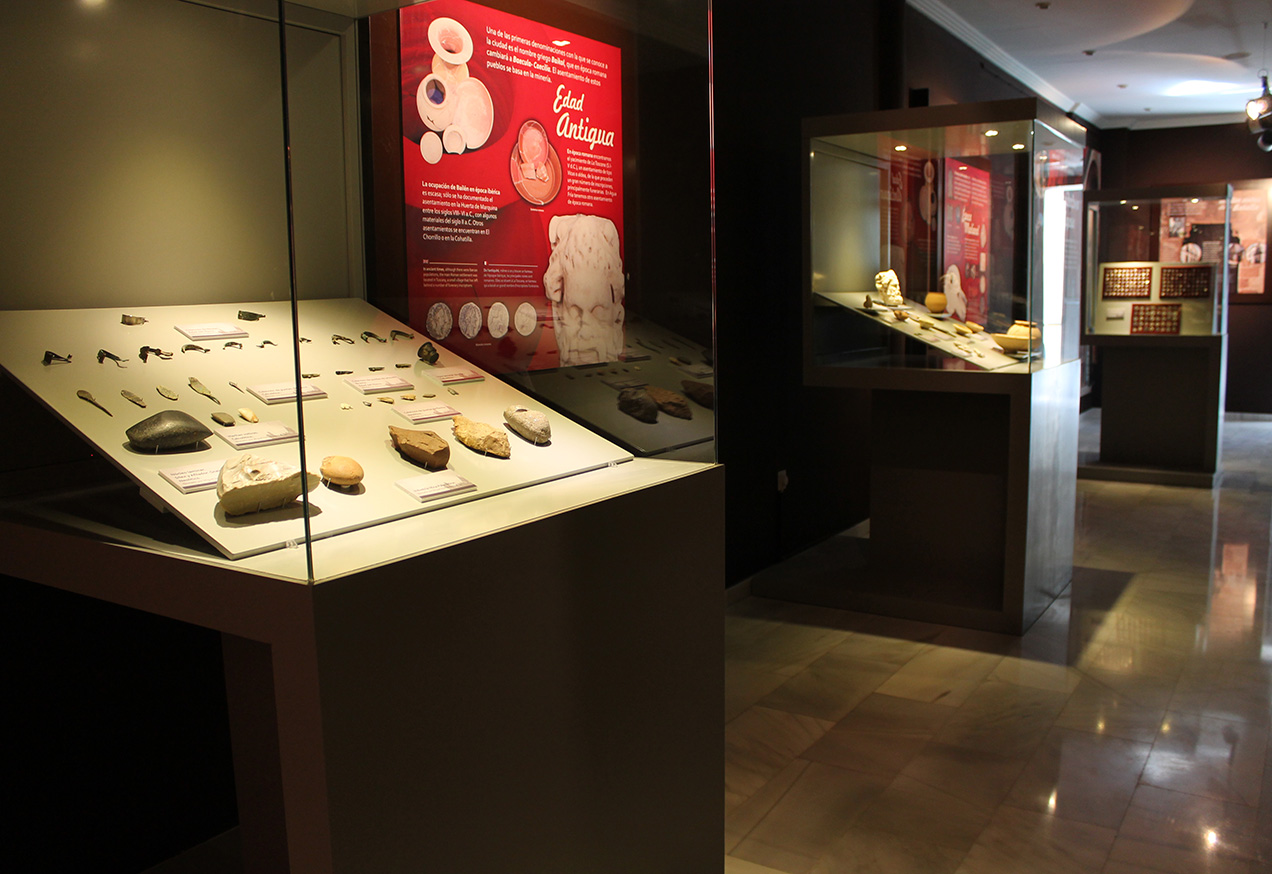
Archaeological Exhibition
Archaeological Exhibition
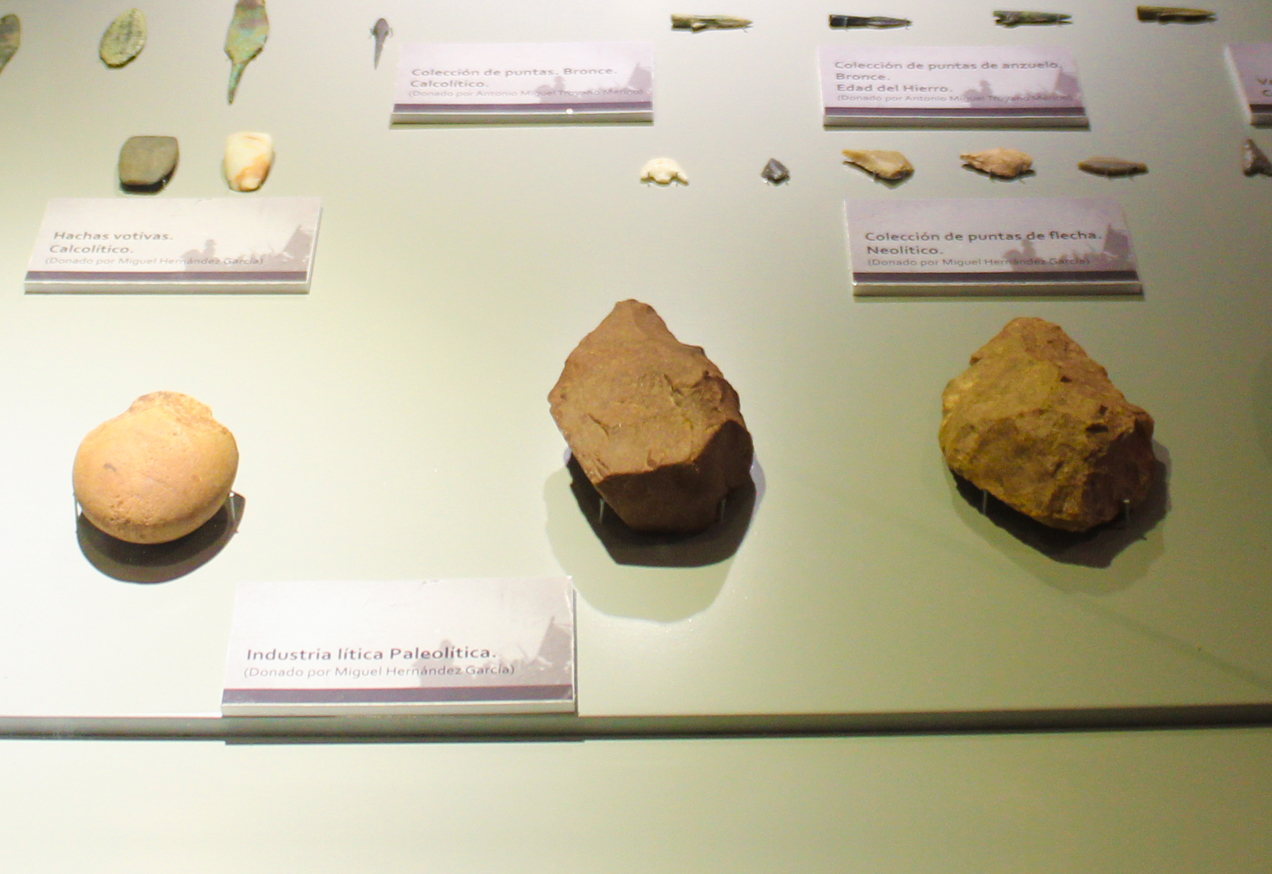
Because it is important to know where we came from, the Museum dedicates a space to analyze the origins of our locality, making a journey through large chronological modules and gathering material vestiges that testify the importance of Bailén as a strategic communication point throughout its history. Likewise, a sample of its extensive ceramic tradition, its natural heritage and the recent historical recreations show us the present of a town forged by its long history.
Click here to know more about the distribution of the permanent exhibition.
Created on 2017-08-10 10:34:22
Battle of Bailén Exhibition
Battle of Bailén Exhibition
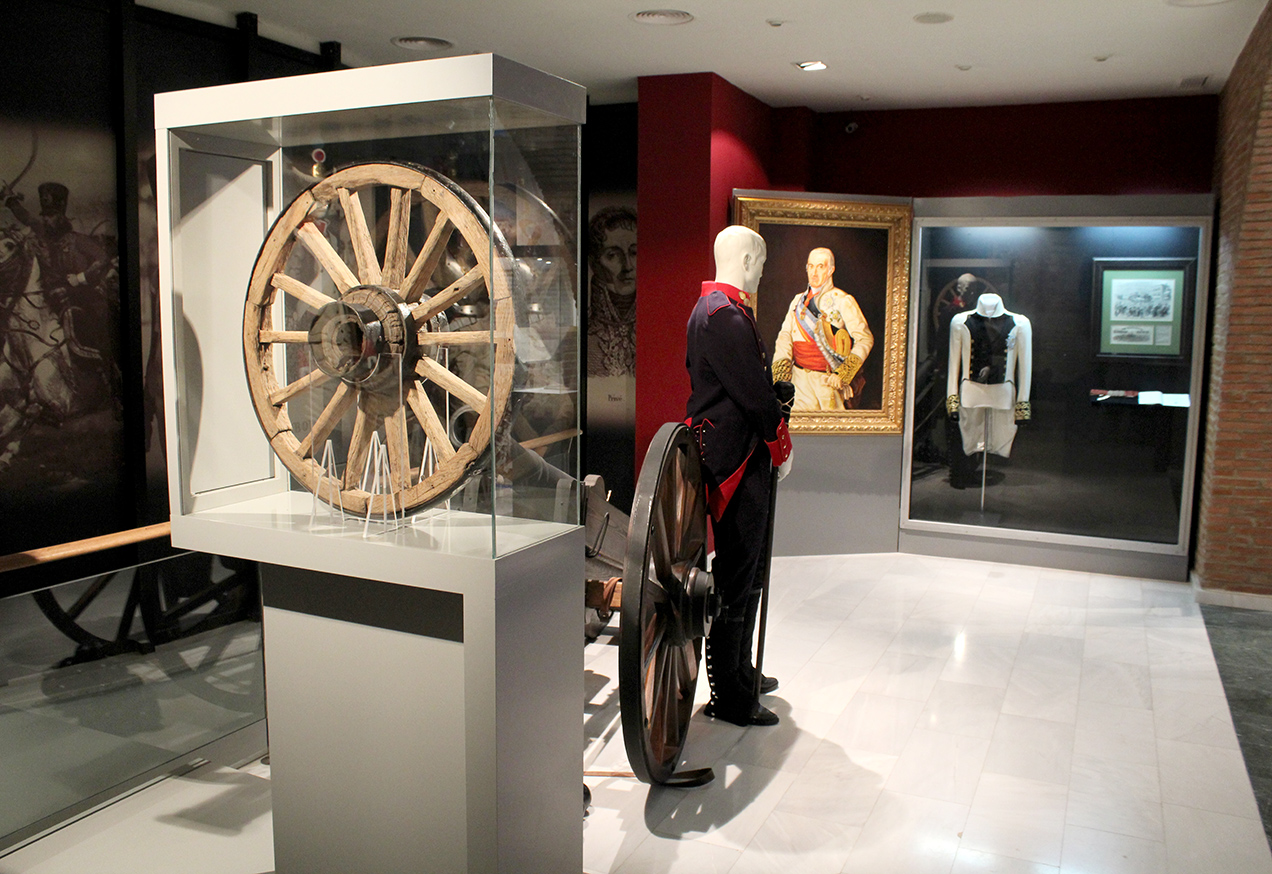
The permanent exhibition of the Museum of the Battle of Bailén aims to be an approach to the events that took place in the Spanish War of Independence (1808-1814), allowing us to plonge ourselves in this crucial period for the historical development of Contemporary Spain.
A expository discourse tells us about the arrival of the French, the defense organization of the national territory, the strategies, the protagonists, the phases of the Battle, as well as their repercussions in local and european level. That reflects the importance of the Battle of Bailén as the beginning of the end of the Napoleon dream.
Click here to know more about the distribution of the permanent exhibition.
Created on 2017-08-10 09:20:32
CERAMIBA
CERAMIBA
Presentation
Bailén is presented as a potter land. The mud work has been part of the essence of this municipality since immemorial times. However, the globalization and the new demands of the consumers have relegate this occupation to a critical economic situation, which jeopardize to make disappear a millennial knowledge who is transmitted through generations. With the premise of trying to stop the threat of one of the characteristic features of the Bailen people, the Bailén department of Historic Heritage Crafts and Ceramics proposes the celebration of the second edition of an International Contest of Artistic Ceramics, which will help to revolutionize and keep alive the ceramic sector.
Created on 2017-08-10 06:44:12
Archeological Chart
Archeological Chart
One of the main goals of the Museum of the Battle of Bailén is the historical research. That is why, in our eagerness to bring to light the past of our locality, the realization of an Archaeological Chart has been started with the intervention of the Prehistory and Archeology Department of the University of Granada. This chart is born with the aim of develop, raise awareness and protect the rich heritage of Bailen.
Created on 2017-08-09 10:58:26
Attention to researches
Attention to researches
The museum of the Battle of Bailén, in its eagerness to increase the research work of the institution, as well as to make its goods more accessible to society, puts the access of their library, archives and collections storage at the service of researchers who request it. On the other hand, the researchers must follow the norms of conservation of the goods and the strict fulfillment of the following conditions:
Created on 2017-08-09 09:53:07
Highlights of the Collection
Highlights of the Collection
GUN
A muzzle-loading gun with system of piston, in concrete it's a "Modèle An XIII". Walnut butt with golden brass corner. Bowl, under-gard and clamp in gold brass. 17.1 mm caliber. It presents the following inscriptions and marks: two marks scratched in the cylinder head; "1809" in the butt next to the beginning of the cannon; "C 1809" in the beginning of the cannon; Crowned "B"; “M[odèle An 1]3"on the top of the beginning of the cannon,"E[mpire] F[ançais] "on the beginning of the cannon.
The origin of this gun is in 1800 when Napoleón formed a commission of generals in charge of the definition of the characteristics of a new model of a muzzle-loading gun that replaced the M1777, used by the cavalry. In 1806 they began to produce it. The inscription "C 1809" indicates that we are dealing with a French weapon manufactured in 1809 in one of the imperial manufactures (Charleville, Saint-Etienne, Tulle, Versailles or Maubege) (BOULET, 1993: 50). The presence of the two scratched marks on the cylinder head could indicate that it was used in a duel of guns.
SPANISH-CARTHAGINIAN DECAL
Spanish-Carthaginian decal coined between the years 221-218 BC. In an unknown mint of the southern of the peninsula (Villaronga, 1994: 69-45).
Obverse: Tanit head looking to the left (with features of indigenous influence).
Reverse: Horse head looking to the right and in front of the neck, a phoenician letter, Aleph.
Smooth edge: The Carthaginians began minting coins in the Iberian Peninsula around 237 BC to pay the tax demanded by the Romans after the defeat of the I Punic War and for the payment of its troops. They were doing that until the roman lost Cartago Nova (Qart Hadast) in 209 a.C. (ALFARO, 1998). In such a short period of time, the coinage was very complete, with values in gold, silver and bronze.
However, the emissions are anepigraphic and the mints are not exactly known (most likely it could be in Akara Leuke and Qart Hadast). The most abundant representations are those of the Carthaginian pantheon gods, Tanit, Melkart and Eshmun with a horse on the reverse (VIVES, 1980).
BACCHIC HERM
A bust belonging to a herm representation of the god Bacchus as a mature man with a beard. The formal traits he presents, especially in eyes and beard, seems to indicate that it is an unfinished sculpture. Its flat back is not sculptured at all. In the upper part there are remnants of a metal staple that problably was used to join this part with other elements that integrated it.
Although the origin of this type of pieces is greek, it will be in the roman world where it acquires its greater development and diffusion from a typological point of view, with the creation of several differentiated models as well the use of different techniques and materials employed for its elaboration that changed its meaning and function.
If in greek culture it was an object of worship related to Hermes, a protector associated to travelers and fertility, for the romans it would became a merely ornamental object in villas and gardens in the provinces of Hispania. These series of hellenistic tradition representations appeared in the roman sumptuary arts between the 1st and 2nd century AD. In Rome it took place the evolution of this hellenistic type who was formed by a pillar of white marble with the representation of a divinity in its upper part, towards differentiated types like the herm-portrait, the herma-decorative or the double-herm (PEÑA, 2002 : 360-362).
The decontextualization of this piece makes it very difficult its chronological age determination and functionality. Therefore, all the affirmations must be taken with caution.
SWAB SET
Steel swab with pole of quadrangular section, slightly curved because of the use. It lacks the stick. Handle with conical wood and studded metallic finishes. An instrument used to clean the bore of the gun barrel, whose shaft corresponds to the length of the barrel for which it is used. Its use was stipulated in Spain at least from the beginning of the eighteenth century (ORDENAZAS, 1728: 68), although its origin was so much earlier, linked to the employ of the first firearms.
MODEL OF THE BATTLE OF BAILÉN
Model that shows the deployment of the troops in the battle of Bailén. Scale: 1: 2000.
The Battle of Bailén occurred on July 19, 1808 during the Spanish War of Independence, it was the first defeat in the history of Napoleon's imperial army. The french troops of Dupont (21000 soldiers) were defeated by the spanish troops of Castaños (27,000 soldiers). Castaños was considered the commander of the Spanish army in Andalusia (ÁLVAREZ JUNCO, 1994).
After the May 2 uprising, Napoleon ordered General Dupont to subject Andalusia and to assist the naval squadron of Rossilly (There were blocked in Cadiz by the Spaniards). On his way to Andalusia, Dupont had to confront the spanish army in Bailén on July 19 ( Seville and Granada committees called for the recruitment of military troops to stop the French passage through Andalusia). Following the Porcuna plan, the Reding and Coupigny Divisions of the Spanish Army of Andalusia, organized by General Francisco Javier Castaños, began a no-mercy battle that ended in the Dupont's surrender (CUENCA TORIBIO, 2006: 156)
Created on 2017-08-08 11:18:32
Guided visits
Guided visits
The museum offers a preliminary reservation for general didactic visits addressed to both students and general public, in which we make a guided tour through the permanent exhibition of the museum. We adapt the information to the particular characteristics of the group.
Created on 2017-08-08 10:07:15